Tuesday, 13 May 2014

Second U.S. case of MERS confirmed


 There is a second confirmed case of Middle East Respiratory Syndrome imported into the United States, the Centers for Disease Control and Prevention announced Monday.
Officials from the CDC and the Florida Department of Health are investigating.
The first U.S. case was reported this month in Indiana. That patient was released from a hospital Friday into home isolation, according to state health officials.
The Indiana patient was an American health care provider who had been working in Saudi Arabia and was on a planned visit to Indiana to see his family.
The Florida patient is also a health care provider who lives and works in Saudi Arabia, said Dr. Anne Schuchat, assistant surgeon general with the U.S. Public Health Service and director of the CDC's National Center for Immunization and Respiratory Diseases.
However, the Florida case is not linked to the Indiana case, she said.
The "risk to the general public remains very low," Schuchat said. In some countries, the virus has spread from person to person, but only in close contact, such as a person who was caring for an ill person.
"This virus has not shown the ability to spread easily from person to person in community settings," she said.
The 44-year-old Florida patient traveled on May 1 from Jeddah, Saudi Arabia, to London, then from London to Boston; Boston to Atlanta; and Atlanta to Orlando.
The man began feeling unwell on the flight from Jeddah, and continued feeling ill on subsequent flights, with symptoms including "fever, chills and a slight cough," Schuchat said.
On May 8, the man went to the emergency department of Orlando's Dr. P. Phillips Hospital.
The hospital said the man is "in good condition and continuing to improve."
Dr. Antonio Crespo, an infectious disease specialist at the hospital, said officials "believe the risk of transmission from this patient is very low since his symptoms were mild and he was not coughing when he arrived at the hospital."
The man was visiting family and did not visit any theme parks in the Orlando area, said Dr. John Armstrong, Florida's state surgeon general and secretary of health.
As in the Indiana case, officials were attempting to contact people -- in this case, more than 500 -- who may have come in contact with the person during travel, both in the United States and abroad.
In addition, 16 staff members at Dr. P. Phillips Hospital have been notified of possible exposure and are being tested for the virus.
Testing of people who have come in contact with the Indiana patient continues, and no additional cases have been seen, said Dr. Tom Frieden, CDC director.


Clay Aiken challenger in North Carolina congressional primary dies after fall

Keith Crisco, the businessman locked in a too-close-to-call Democratic primary against the former ‘American Idol’ singer, died Monday after falling at home, according to local reports. He had trailed Aiken by just 369 votes.

MANDATORY CREDIT
Congressional candidate Keith Crisco, center, watchesNorth Carolina election results on a computer May 6. Crisco passed away Monday.

Keith Crisco, the North Carolina businessman locked in a tight Democratic congressional primary race against former “American Idol” star Clay Aiken, died suddenly Monday.
Crisco, a textile entrepreneur from Asheboro in central North Carolina, died after suffering serious injuries in a fall inside his home Monday afternoon, the Asheboro Courier-Tribune reported.
He fell around 1:30 p.m. and was declared dead when emergency services arrived, according to the paper.
The North Carolina State Board of Elections confirmed Crisco’s death, saying that officials were “saddened to hear” of his passing.

Casey Kasem might be on 'Indian reservation'


The big question: Where is Casey Kasem?
His daughter, Kerri Kasem, thinks he may have "fled the country" or possibly be on "an Indian Reservation."
A judge on Monday ordered an investigation into the whereabouts of the famed radio countdown host, 82. An attorney for Kasem's wife, Jean, told the court that Casey Kasem, who became famous for his weekly American Top 40 radio show and as the voice of Shaggy in the Scooby-Doo cartoon, had been removed from Los Angeles without his children's knowledge. He has advanced Parkinson's and can no longer speak.
Superior Court Judge Daniel S. Murphy ordered a court investigator and adult protective services to find out where Kasem is being treated, reported AP. Kasem has been in various medical facilities chosen by his wife. Jean Kasem, and Kasem's kids have long been battling over their father.
CNN reports that also on Monday, Kasem's daughter, Kerri Kasem, was named as temporary conservator of her dad.
The conservatorship is in effect until June 20, when a hearing is scheduled on whether to make the conservatorship permanent, according to the Los Angeles County Superior Court spokeswoman Patricia Kelly.
"Justice was finally served! I just won temporary conservatorship over my father's healthcare. We have been vindicated by the court. Thank you for your prayers, well wishes and support through this entire ordeal," Kasem's daughter, Kerri Kasem, posted on her Facebook page soon after the order.
Later, she added: "I believe my father's wife fled the country (or possibly went to an Indian Reservation) with my Dad because she knew I would win in court today. The judge ordered, Adult Protective Services, the PVP Attorney and the police to look for him. Please pray that he is safe."

The Blacklist Season Finale Review: Berlin Conclusion

The Blacklist season finale is here to answer your questions...or perhaps raise more of them. Here's our review.

This Blacklist review contains major spoilers..

What a strange and uneven season finale both parts of "Berlin" turned out to be. When you think about it, though, these two episodes are almost like the entire first season of The Blacklist in microcosm. There are moments of greatness interspersed with all manner of questionable storytelling and character decisions. Legitimate mysteries are made tedious by extension and obfuscation. And through it all, we're really just waiting for the next great Red Reddington quip. Anyway, on with the review...
For the most part, the conclusion of "Berlin" is superior to the first part, mostly thanks to a few well-placed action sequences and a surprise or two throughout the episode. Unfortunately, I couldn't help but feel that at least half of this episode felt more like the first part of a two-parter than last week's actual part one.
Like last week's episode, there was still entirely too much talking and not enough doing. Endless montages of guys with Russian accents saying they don't know anything. Two Red/Lizzie conversations about the nature of their relationship, the death of her stepfather, and how everything is just "part of a much larger puzzle." Haven't we seen enough of this stuff throughout the season?
This doesn't mean that there isn't fun to be had, though. Donald kicking ass in the club, and later his calmly threatening (threats he makes good on) demeanor during the interrogations make me wish we had seen a little more of his evolution from "conventional badass" to "rule breaking badass." It was something that was just sorta given to us and then forgotten about until it was convenient. I know some viewers find him a little square, but I think there's a great character in there, somewhere, and I really hope the writers get at that in season two.
Meera's death was a bit sudden. In these cases, a surprising, brutal death of a regular character is almost welcome, but Meera's felt more like she was simply the expendable one. After her rather strange arc this season, I suppose I can see why, but I'm not really sure how satisfying or integral to the whole episode it ended up being (other than to indicate that Berlin and his guys mean business, which was already abundantly clear).
Thankfully, Cooper will survive, which means we get Harry Lennix back next season. I would feel even better about this if I was certain that the knowledge that the man who tried to kill him is still running around out there will get him to take a more active role in the proceedings. This show desperately needs more than Lizzie and Red every week, otherwise we're going to be caught in an endless loop of trust issues, meltdowns, and misty eyed reconciliations set to assorted soft rock tunes.
There are some classic Red moments to be had. "I'm not a monster. I wouldn't hurt a dog," was the kind of line we tune in for each week. But...again...we've already seen Red making himself at home at a target's dining room table at least one other time this season. The real standout is his standoff with the "fake" Berlin and Evil Tom. I love it when Red gets his hands dirty, and it's good to be reminded that he's a quite competent criminal and a hell of a shot. I'd say we should see more of that, but I admit, it would lessen the impact of scenes like this.
"I'm going to take that gun away from you," he tells Tom. I had little doubt that he'd be able to do it, and really would have liked to see it. Lizzie beats him to it, though. But what of Tom, anyway? I read enough comic books to know that if there isn't a body, he probably won't stay dead. Did Lizzie help him/let him live out of guilt? Out of respect for the love she once felt for him? In exchange for more information that Tom has?
Now, the elephant in the room: Berlin himself. I was prepared to disbelieve his Keyser Soze style backstory as mere criminal hyperbole, until we see him with that pocketwatch at the end. So, this guy is the real deal, and he is Red's opposite number, far more ruthless, and short a hand. All he needs is a hook and an eyepatch. It's safe to say that we'll be seeing more of him next season.
And then there's that tease at the end. Red's assurances that Lizzie's real father died in that fire are meant to ring true. He looks her dead in the eyes and offers none of the usual indications that he's gilding the lilly or playing games. Ah, but then we're shown those mysterious burn scars on his back!
"Your father is still alive," Tom told Lizzie with his dying breaths. Or DID he? He could just as easily have told her "Red is actually your Dad." Which, when you think about it, is essentially the same thing as saying that her pop is still alive. If that's the case, is Lizzie now testing Red to see how far he's willing to go to deceive her? I would be very interested in this if the show had done more to convince me that Lizzie is capable of thinking so many moves ahead. As it stands, this is an FBI agent with situational awareness so poor that a guy with a gun just walked up to her car and jumped in the passenger seat tonight. Granted, he's supposed to be a badass secret agent, but can we please put her on even footing with someone?


Ann Coulter Inadvertently Turns Herself Into a Joke After Mocking #BringBackOurGirls Campaign

Ann Coulter, Twitter


Comedy is not Ann Coulter's forte.
The conservative commentator tried to humorously protest the #BringBackOurGirls movement Sunday by tweeting a photo of herself holding up a sign that read: "Bring Back Our Country." Her attempt at humor was poorly received, as dozens of memes proves. After all, First Lady Michelle Obama and Academy Award winner Anne Hathaway are among the thousands who have been championing the #BringBackOurGirls cause, which was created earlier this month to draw support for the missing schoolgirls in Nigeria. Since Coulter published her picture, it's been retweeted more than 2,000 times.
"My hashtag contribution to world affairs..." Coulter tweeted. Twitter user @MestizaMetaphor altered the image so that Coulter's paper appeared blank, writing, "Have fun kiddos." Needless to say, the polarizing political pundit's plan backfired spectacularly. Here are some of the more popular memes:

What Donald Sterling gets wrong about Magic Johnson, HIV and history

Businessman and former NBA star Magic Johnson smiles for a picture with members of an AAU girls basketball team in Saginaw, Mich., Tuesday, April 29, 2014. Johnson returned to Saginaw for the third annual
Magic Johnson smiles for a picture with members of an AAU girls basketball team in Saginaw, Mich., on April 29. Johnson returned to Saginaw for the”Magic of a Promise” fundraiser for the Saginaw Promise Scholarship. (Neil Barris/The Saginaw News via Associated Press)


When CNN first released excerpts of disgraced Los Angeles Clippers owner Donald Sterling’s sit-down with anchor Anderson Cooper, one of the odder moments in the highlight reel was Sterling’s criticisms of Magic Johnson as a role model. The full interview revealed the reason: Sterling thinks Johnson is an embarrassment because of his sexual history and the fact that he is HIV positive.
That is an ugly, retrograde sentiment that shames people who contracted the virus because of their sexual history. And Sterling also profoundly misunderstands the ways in which Johnson’s HIV diagnosis actually led him to make enormous contributions. Johnson has not just been a role model to the “children of Los Angeles” Sterling said should be his focus, but also an ambassador who changed America’s understanding of his disease.
When Johnson revealed his HIV status in 1991, many Americans still thought that the disease was limited to gay men, and in particular to white gay men, even as the virus jumped populations. Johnson alluded to that in his remarkable news conference announcing his diagnosis and his retirement from the Lakers
“We think, well, only gay people can get it, it’s not going to happen to me,” Johnson said, explaining his decision to focus on HIV and safe sex education and advocacy, which he would do through his Magic Johnson Foundation. “And here I am, saying it can happen to anybody, even me, Magic Johnson.”
In coming out, Johnson provided a radically different image of what it meant to live with HIV. He was African American, heterosexual, married (he emphasized his relief that his wife had tested negative) and outwardly healthy.
“My strength is fine; I can work out and do everything a normal person can do,” he said, urging his fellow NBA players to get tested and to learn their statuses.
Johnson himself said he got tested only because he needed to as part of the process of purchasing a life insurance policy. In his coming-out press conference, Johnson ceded the stage to a group of doctors, giving them an opportunity to explain to sports reporters the medical consensus on how to treat HIV and the prognosis for survival.
Despite his retirement, Johnson would come back to play professional basketball again, being named MVP of the All-Star Game in 1992 and playing on the Dream Team in the Olympics that same year. It was a remarkable illustration of what life with HIV could be.
He did not do it alone, and without the support of his league and teammates, either. Professional sports sometimes get a bad rap for lagging on social issues: Michael Sam’s selection by the St. Louis Rams in this year’s NFL draft will finally make him the first openly gay athlete in that league. Johnson’s case provided a reminder of how sports can lead, rather than follow.
Such was Johnson’s power as a player that he enlisted the NBA to support him in his announcement. Lakers teammate Kareem Abdul-Jabbar was by Johnson’s side at his press conference, and then-NBA commissioner David Stern was also on the dais, speaking at length after Johnson ceded the stage.


'Alien' Artist H.R. Giger Dies at 74

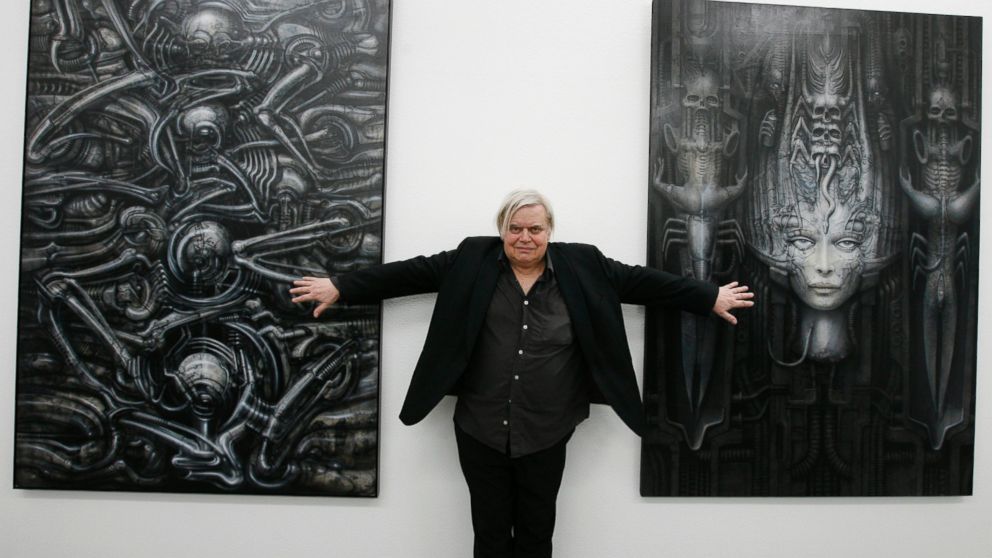
PHOTO: Swiss artist H.R. Giger  poses with two of his works at the art museum in Chur, Switzerland, June 29, 2007.


Swiss artist H.R. Giger, who designed the creature in Ridley Scott's sci-fi horror classic "Alien," has died at age 74 from injuries suffered in a fall, his museum said Tuesday.
Sandra Mivelaz, administrator of the H.R. Giger museum in Gruyeres, western Switzerland, told The Associated Press that Giger died in a hospital on Monday.
Giger's works, often showing macabre scenes of humans and machines fused into hellish hybrids, influenced a generation of movie directors and inspired an enduring fashion for "biomechanical" tattoos.
"My paintings seem to make the strongest impression on people who are, well, who are crazy," Giger said in a 1979 interview with Starlog magazine. "If they like my work they are creative ... or they are crazy."
Born Hans Ruedi Giger on Feb. 5, 1940, in the southeastern Swiss town of Chur, he trained as an industrial designer because his father insisted that he learn a proper trade.
His mother Melli, to whom he showed a lifelong devotion, encouraged her son's passion for art, despite his unconventional obsession with death and sex that found little appreciation in 1960s rural Switzerland. The host of one of his early exhibitions was reportedly forced to wipe the spit of disgusted neighbors off the gallery windows every morning.
A collection of his early work, "Ein Fressen fuer den Psychiater" — "A Feast for the Psychiatrist" — used mainly ink and oil, but Giger soon discovered the airbrush and pioneered his own freehand technique. He also created sculptures, preferably using metal, styorofoam and plastic.
Giger's vision of a human skull encased in a machine appeared on the cover of "Brain Salad Surgery," a 1973 album by the rock band Emerson, Lake and Palmer. Along with his design for Debbie Harry's solo album, "Koo Koo" (1981), it featured in a 1991 Rolling Stone magazine list of the top 100 album covers of all time.
Giger went on to work as a set designer for Hollywood, contributing to "Species," ''Poltergeist II," ''Dune," and most famously "Alien," for which he received a 1979 Academy Award for special effects. Frequently frustrated by the Hollywood production process, Giger eventually disowned much of the work that was attributed to him on screen.
The image of a brooding, mysterious artist was nurtured by Giger working only at night, keeping his curtains permanently drawn and dressing mainly in black — a habit he acquired while working as a draftsman because it made Indian ink stains stand out less on his clothes.
While his work was commercially successful, critics derided it as morbid kitsch. His designs were exhibited more frequently in "Alien" theme bars, short-lived Giger museums and at tattoo conventions than in established art galleries.